Our digital to film transfer service
We constantly get messages such as ‘I never knew it was possible to convert digital images to photographic film’ or ‘love your retro conversion service’ or ‘how on earth is it possible to convert my digital camera photos to 35mm slides’. So I suppose it’s about time I explain how it all came about.
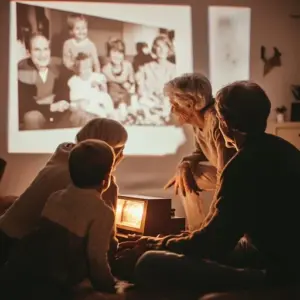
Up until the 1990s, when things started getting complicated, shooting on film was the norm. In the world of business, 35mm slides had always been used for business presentations and they were used in museum displays, school and college lessons and lectures, cinema advertising, sales presentations and point of sale displays. And of course, in the home to record friends and family, holidays and special occasions, let alone an absorbing hobby for many. I remember the groans going up when the slide projector was set up at the family gathering at Christmas (I regret the moans now, it was a special thing).
In the commercial world, slides were either shot direct in-camera (which were generally duplicated for projection) or were created from drawn flat artwork copied with a camera or made in the darkroom. Quite expensive to do as there was so much craft and labour involved. Graphical slides such as charts or diagrams were drawn/painted in colour and rephotographed onto colour film. But in the late 1970s and 1980s we specialised in creating full colour 35mm slides with multiple elements of pin-registered black and white artwork elements, each being separately exposed with coloured backlight onto a single frame of film by multiple exposure. The pin-registered rostrum camera allowed accurate alignment of the separate elements and the camera could expose all the red elements on a roll first, them rewound to begin all the yellow elements, for example.
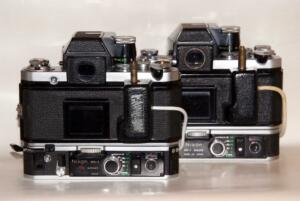
Pin-registered stills camera info: Pin Registration Nikon camera and Pin registered Nikon F2
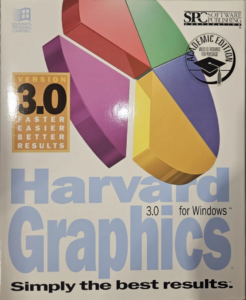
In parallel, in the 1980s, desktop computers became common, along with software programs specifically designed to create business charts and graphs in full colour with relative ease and without any personnel with graphics ability (such as Harvard Graphics & Lotus 123). This partly removed the need for time consuming and expensive manual processes but business still relied on projected 35mm slides. In response to that need, came the introduction of the film recorder – a desktop box of tricks that ‘printed’ the digital data onto a roll of 35mm slide film. That saw a rapid demise of the old ways of graphic slide production.
The initial devices were pretty rudimentary with nowhere near the quality of traditional techniques but, as always, the benefits of speed and cost always won out.
My studio, a specialist in industrial and commercial photography, pretty much moved away from graphical slide production as the business model was destroyed but came back to film recorders in the 1990s for a different reason. Film recorder technology had improved a lot, largely on the impetus of an allied industry – movie making. The rise of computer generated imagery (CGI) in the 1990s required better image quality and faster transfer to film negative (e.g. The Abyss, Jurassic Park, Toy Story) and these massively expensive digital to film transfer machines became economised and reduced in size to suit the still image world at an expensive but commercially viable price tag.
In the early 1990s we did a lot of retouching of images – from rectifying mistakes such as a lighting stand leg being seen at the edge of a shot to removing blemishes in products (ever tried photographic chocolates?) to changing the colour of a tractor. As our customers required b&w prints, colour prints or colour transparencies, we inevitably made a large print of the faulty image and got an airbrush artist to paint out he correction then rephotographed the print onto negative or transparency film stock, so that prints and transparencies could be supplied to the customer.
And yet, we were already proficient in the predecessors of Photoshop (and later Photoshop) so why not use the latest 8k version of desktop film recorders? We ran trials to find out if they could output high quality continuous photographic images and found they did the job really well – and a large investment was made. From that point, on we did all retouching inhouse and, as a bonus, skipped the rephotographing step and the quality of work improved – and reduced the time and cost.
We offered this service to fellow studios, as well as doing some regular 35mm graphics slides. But come the turn of the millennium, film photography began to be rapidly replaced by digital cameras (we had switched pretty much entirely by 2001) and companies were adopting digital projectors or large screens, so our film recorder was used infrequently.
Being rather techy, we were always a bit ahead in the digital world, in spirit if not in practice (although we adopted online banking in 1985, before the new fangled world wide web!). And we were producing HTML web sites in the late 1990s. So I thought why not offer this digital to film process to a wider audience – keeping the kit running (not just the film recorder but our in-house film processing lab) should be possible if offered to UK-wide rather than just locally.
So in 2003 I built digitalslides.co.uk on an ecommerce platform that allowed not just orders to be taken but payment to be made and images uploaded.
So yet another transition of the business began. While our internal use of traditional film photography had ended and switched entirely to digital (commercial and advertising photography, graphic design, fine art reproduction) our external online service was exactly the opposite – digital imagery back to photographic film!
Clearly, in the face of the digital takeover, converting digital images back to film was always going to be a niche business. And this is the strength of the internet – it knows no boundaries. We sell all over the world and this has never been stronger than now (writing in 2026) as all the competing labs have disappeared due to equipment failure, retired experienced staff, inability or disinclination to compete, lab closure and so on. In fact we are one of the last full service, fully in-house digital to photographic film labs left in the world.
So who do we sell to? Well, probably you, having read this far! Frankly, we sell to a much wider market than anticipated – the use our service is put to, constantly surprises. But I’m going to break it down to a few areas.
ARCHIVING
Many are concerned with the relatively short life of digital media. Types of digital storage media formats constantly change, magnetic media degrades, online ‘cloud’ storage can be discontinued, become inaccessible or just switched off. What will becomes of our digital images in 10 or 20 years time, let alone our legacy in 100 years time? Black & white photographic film negatives are inherently archival – history proves this to us – and could easily be 200 years plus, given ideal storage conditions. Even modern colour film processes are excellent when stored properly – way better than the longevity of the 1950s and 60s processed film.
Not only is the physical film innately long lasting, the means to use the media is easy – enlargers, viewing boxes, projectors have remained the same since the beginning of the mass adoption of photography itself. We can as easily print from a 150 year old glass plate now as we could then. Film we shoot now will be easily accessible to those 150 years hence. But we can’t say that about digital images. Digital images will require ongoing, constant periodic transfer from one medium to another, one format to another, if they are to survive the next 150 years.
Our service of recording digital images to photographic film helps achieve our long term legacy.
STUDENTS
We have a constant throughput of work coming from students both in the UK and abroad. The UK has a lot of arts based courses where photography has a major or minor role. The traditional silver based photographic techniques are well catered for within the universities and colleges. but as we bridge the digital and analogue worlds, we are well placed for those who wish to stretch boundaries and shoot digitally, manipulate digitally but end up with real film negatives to print in traditional analogue darkrooms as well as producing negatives for alternative photo printing.
TRADITIONAL CRAFTERS
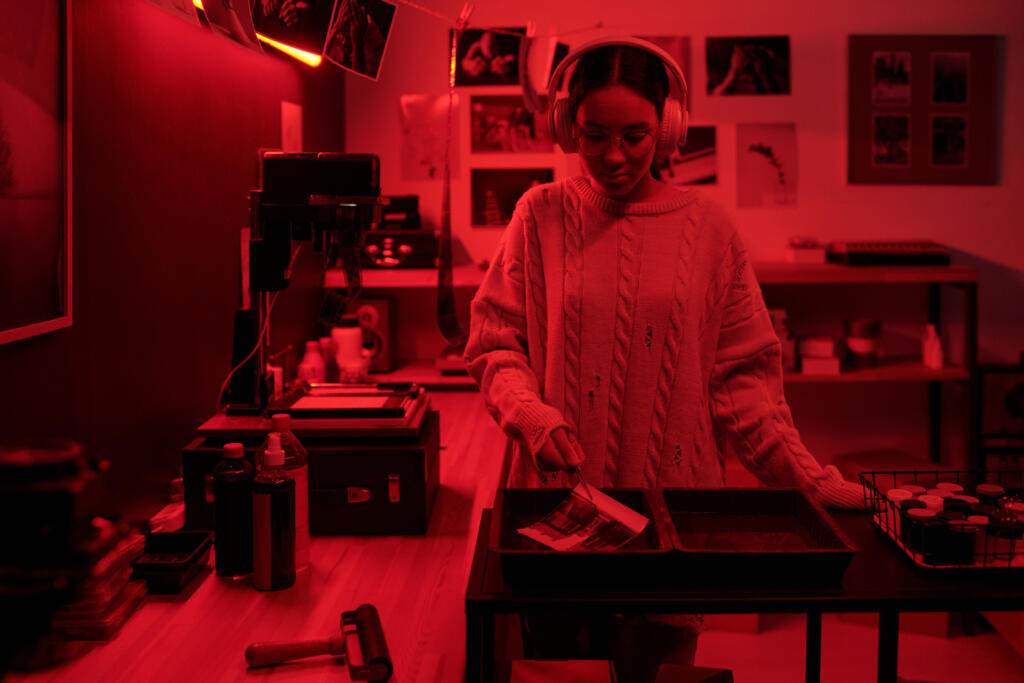
Film is definitely not dead. Youngster today are rediscovering the joy of silver-based media – the traditional craft photographer eschews the ‘snap by the thousand’ photography style many of us have become accustomed since the advent of phone cameras.
Black & white photography in particular has had a massive comeback. By using our services, even those who shoot digital are able to have negative images made so they can enjoy proper darkroom printing. And, taking a less traditional path, photographers can manipulate their digital images and create darkroom prints that would be impossible any other way.
Counterintuitively, it can be cheaper to go down the digital to analogue route as you can do all your picture selection, editing, dodging and burning on your computer in Lightroom and Photoshop and only output your best work to film negative before diving into the darkroom.
ARTISTS
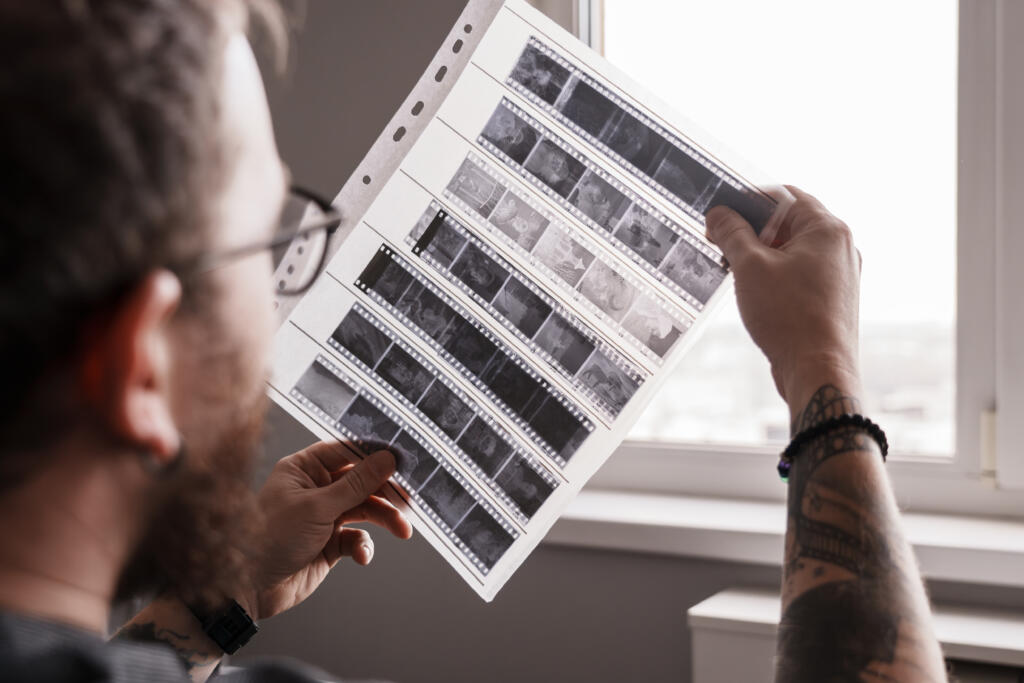
So, artists. Distinguishing them from traditional crafters, their output is much more varied – often the digital to analogue process is a means to an end. It might be a multimedia image and sound multiple slide projector show, or just using a slide projector as a means to make huge images on walls. It might just be using the projected image as an assistance to paint something else. But almost always there is a third party viewer element – a show, a gallery exhibition, a public event.
SLIDE COLLECTORS
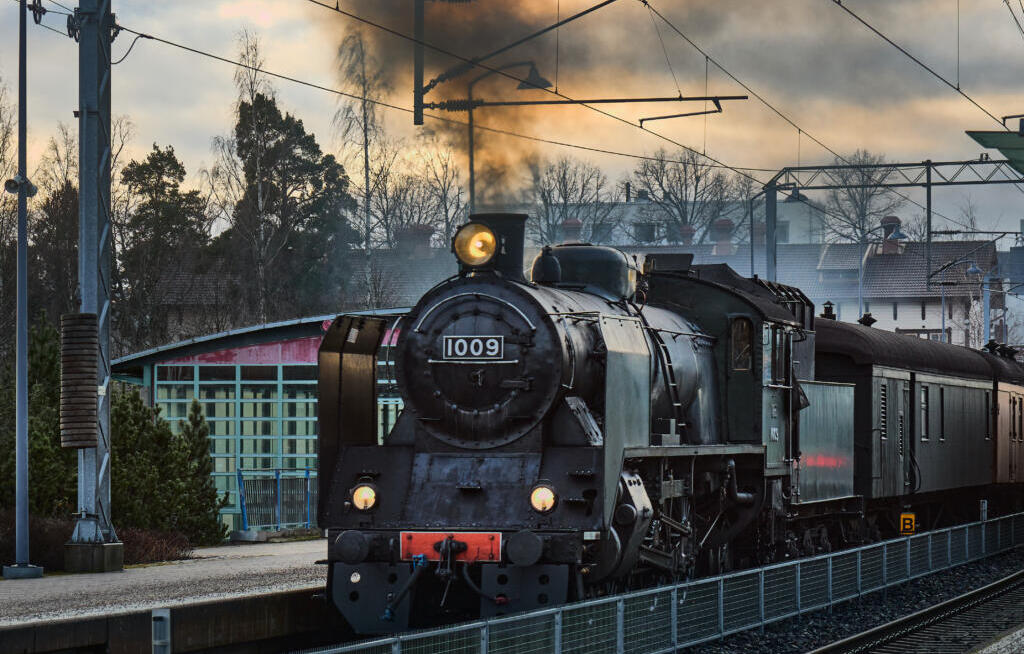
Unknown to all except the users, there is a thriving trade between specialist collectors of past, modern and contemporary photographs of transport. We have found it to be mainly in the areas of locomotives and aviation, but other forms of transport too. Train spotting, without hanging around rail stations.
The original material may be original digital photos but are mostly derived from scans of historical prints and photographic slides. It isn’t possible to make direct duplicates from original photos any more and the only (and better) solution is to make digital scans (then clean up and colour correct) and have us output back to film optimal quality 35mm slides.
TECHNICAL
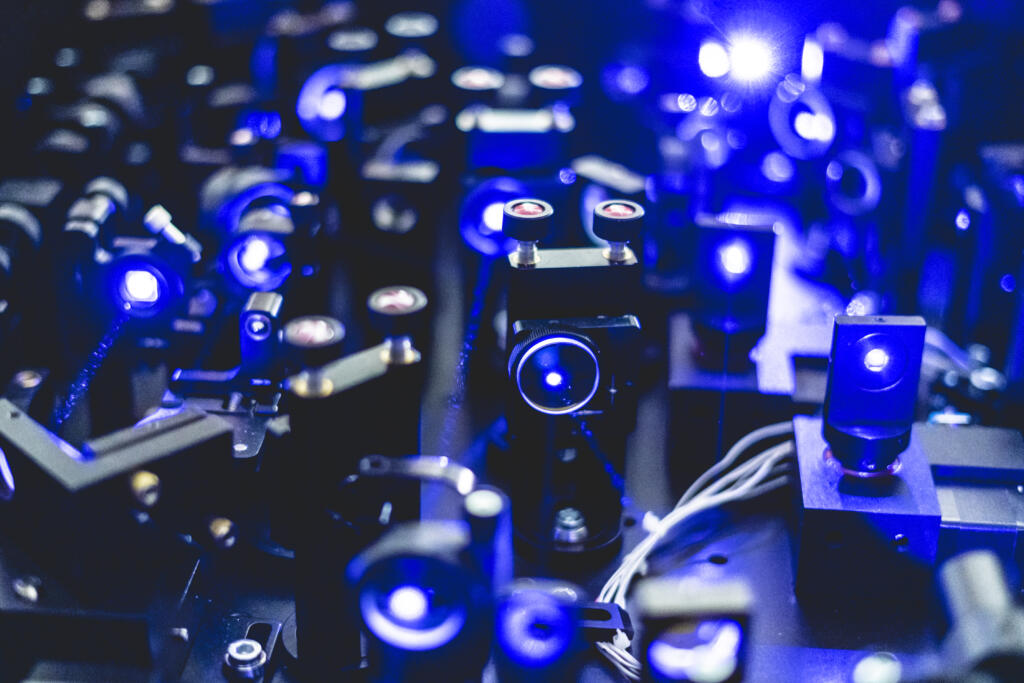
One area of digital to film usage that wasn’t anticipated isn’t actually related to photographs as such. Many research and high tech companies have found a use for our output, in black and white and colour, in the fields of colour profiling, 3D mapping, optical development While the process was Optical, 3D mapping and scanning, light collimation and optical diffraction.
Not fields we have any knowledge of but nonetheless our services have proved useful to those that do! Especially useful is how cheap our process is and proves particularly useful in developmental stages of product development, where empirical test and refine cycles are used prior to expensive prototype manufacturing.
STAGE, TV and FILM
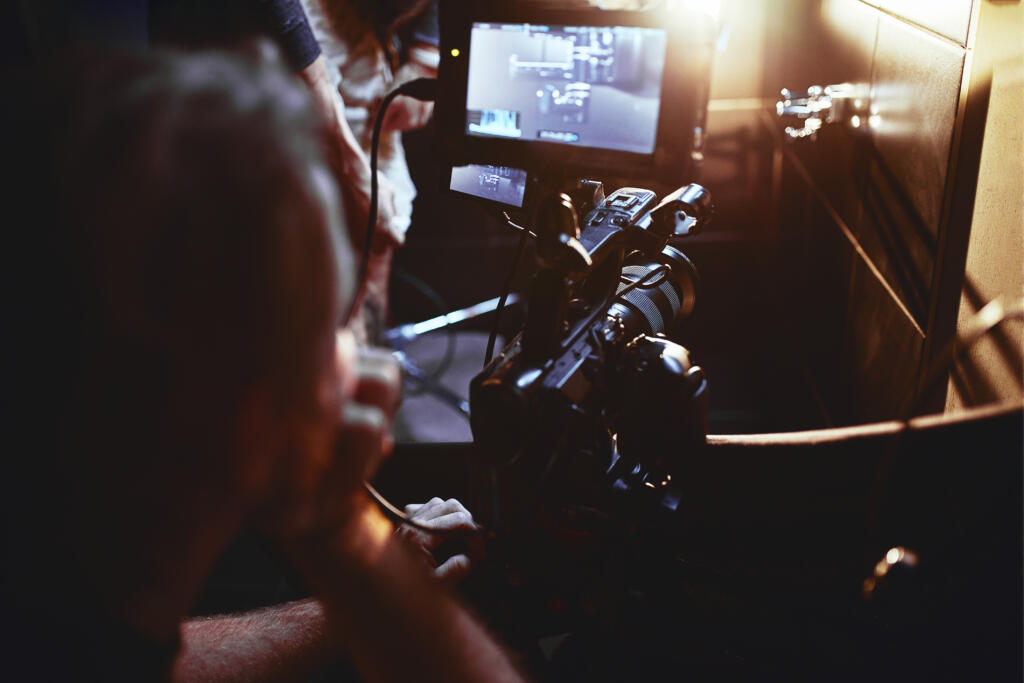
We produce a lot of work for film and TV production companies, both major studios and independents. Sometimes it can be photographic film products as practical props in scenes set in darkrooms, or lecture theatres and may be used in period dramas from Victorian periods onwards.
Often it could be in factual programs such as retrospective ‘life of’ sports stars or politicians, sitting in front of a projection screen with a slide projector clacking away over their shoulder.
One of the great advantages is that the design team can shoot original material on modern digital cameras, post process as if they were old tech or amateur snaps then ask us to output as negatives, slides or transparencies to be used as props in, say. a 1970s drama of documentary reconstruction.
We can assist with advice on period correctness and suitability and are perfectly happy signing NDAs, if needed.
PUBLIC SPACES
Museums, public or private, often use our output as part of multimedia experiences, limited time shows or hands on interactive events – using our View-Master reels for instance or slides used under microscopes to simulate the experience of microscopy,